| Reviews: XTC: Skylarking |
 |
- “XTC's Best Album: Skylarking”, Aphoristic
Album Reviews, June 9, 2019
- Diffuser, October 27, 2017
- “Moronophonics 09 | XTC / Skylarking”, The
Pods & Sods Network, July 13, 2017
- Ephemereality, September 1, 2016
- KamerTunesBlog, August 18, 2016
- Audiophile, August 15, 2016
- PopMatters, April 24, 2015
- Chameleonfire1, December 27, 2014
- Pureambient / Dave Stafford, August 8, 2014
- Ordinary Times, May 30, 2014
- Dangerous Minds, April 28, 2014
- Flipside Reviews, April 22, 2014
- Psychedelic Sight, March 9, 2014
- In Deep Music Archive, November 24, 2013
- KamerTunesBlog, July 25, 2013
- Burning Wood, July 15, 2013
- 5, January 14, 2013
- Paste, February 1, 2012
- C-Noise, July 26, 2011
- Shindig!, May 24, 2011
- Listology, November 16, 2009
- Otago Daily Times, September 5, 2009
- Sydsvenskan, March 10, 2009
- News Blaze, March 6, 2009
- Mojo, November 6, 2008
- Bubblegum Aesthetics, October 28, 2007
- Being There, circa March 2007
- Rhapsody, circa 2006
- Treble, September 11, 2006
- Sentire Ascoltare, circa 2006
- 24,000 Dischi, October 2004
- Harizma, 2004
- h2g2, September 18, 2004
- Uncut, August 2004
- Hurtmore!, June 17, 2004
- Music Junkies Anonymous, March 27, 2004
- Citizen Keith, February 18, 2004
- Blender, circa 2003
- The Daily Vault, November 14, 2003
- Pop Matters, February 23, 2003
- “Skylarking a unique journey”, The Michigan
Daily, January 9, 2003
- Clink Magazine, 2003
- OTG, 2002
- The New and Improved Fyfeopedia, circa
2002
- Pitchfork, November 2002
- Haddock.org, October 24, 2002
- Another Satellite, September 26, 2002
- It.Arti.Musica.Rock, May 2002
- It.Arti.Musica.Rock, June
2002
- Mark's Record Reviews, April 2002
- Martin Venator, circa 2001
- Virgin (Denmark), 2001
- Adrian's Album Reviews, 2001
- Cole Reviews, October 2001
- Music Junkies Anonymous, October 13,
2001
- Soundi, September 2001
- Chez Jean-Louis Bergami, September 2001
- CNY Music & Art, August 2001
- Music Junkies Anonymous, August 30, 2001
- Blindsummit, 2001
- Birmingham Post, May 26, 2001
- groove.no, March 27, 2001
- Elidor, February 8, 2001
- Rough Guides, circa
2000
- Jake Laufer's Homepage Caliente, circa
2000
- Rip and Rock, circa 2000
- Music Matic, circa
2000
- Amazon.com, circa 2000
- Q, circa 2000
- Das Kultursyndikat, circa 2000
- Ars Gratia Artis, circa 2000
- Candidate, circa 2000
- 1-0, 2000
- I Ragnacci del Web, November 2000
- Elidor, September 25, 2000
- Kalporz, June 26, 2000
- Ground and Sky, May 31, 2000
- Cosmicben's Record Reviews, circa 2000
- Music.com, circa 2000
- Disclaimer Music Review Archive, circa
2000
- musthear.com, circa 2000
- TheLogBook.com, circa 2000
- All Music Guide, circa 2000
- Palpable's Domain, February
2000
- Space Ghost, January 7, 2000
- Dom's
Pornographic Wasp Colony, circa 1999
- El Intruso, 1999
- TNT, 1999
- Ink Blot, 1999
- The Gallery of Indispensible Pop Music,
circa 1999
- Chapters.ca, 1999
- MUZE, circa 1999
- Barnes & Noble,
1999
- Ground and Sky, February 27, 1999
- Mark's Record Reviews, January
1999
- Matt Kaden, January 25,
1999
- The Old Punks Web Zine, circa 1998
- Jeff Partyka's Mega-Music Page, 1998
- SoundCheck, November 1998
- Homeless Page, June 1998
- Wilson & Alroy's Record Reviews,
July 1996
- Sifting Through the Wasteland, April 27,
1996
- Soundstage, 1994
- Rolling Stone, November
16, 1989
- LM, circa 1987
- Rolling Stone, December
1987
- The Georgia Straight,
September 11, 1987
- Creem, July 1987
- Playboy, June 1987
- The Tech, April 10, 1987
- Relix, March 1987
- Rolling Stone, March 26,
1987
- Village Voice, February 24, 1987
- “Todd Rundgren leaves his mark on XTC's latest
disc”, The Michigan Daily, January 23, 1987
- Billboard, January 10,
1987
- CMJ New Music Report, December
19, 1986
- Rolling Stone, 1986
- Q, 1986
|

Original LP, 1986

Reissued LP, 2010 |
Todd Rundgren produced this 1986 masterpiece that threads it's songs
together by their progressive themes of love's and life's joys and
transgressions. Beautifully orchestrated, this year's Apple Venus Vol. 1
sounds like it could have been Skylarking's follow-up album. The string
arrangements lift the listener of songs like "Ballet For a Rainy Day," "1,000
Umbrellas," and "Sacrificial Bonfire" to new heights. The hit "Dear God"
appeared on later releases of this album as an after-thought, after receiving
airplay as a single. Skylarking is one of the most beautiful collection of
songs XTC has ever recorded.
— Bulletproof Classics, Rip and
Rock, circa 2000
|

XTC
Skylarking
Ape 2-LP
www.ape.uk.net
 Did you know that, up until this incarnation, all copies of XTC's 1986
masterpiece Skylarking were out of polarity? I bloody didn't, and I
pride myself on my ears; they're such darling little dears. Anyway, the fault
was identified and recitified by John Dent of Loud Mastering, resulting in the
luscious aural Cinemascope of this double vinyl remaster. “12-inch vinyl
running at 45rpm is the best quality sound carrying medium we have at the
moment,” notes XTC figurehead and flame-keeper Andy Partridge.
“All albums should be on it.”
Did you know that, up until this incarnation, all copies of XTC's 1986
masterpiece Skylarking were out of polarity? I bloody didn't, and I
pride myself on my ears; they're such darling little dears. Anyway, the fault
was identified and recitified by John Dent of Loud Mastering, resulting in the
luscious aural Cinemascope of this double vinyl remaster. “12-inch vinyl
running at 45rpm is the best quality sound carrying medium we have at the
moment,” notes XTC figurehead and flame-keeper Andy Partridge.
“All albums should be on it.”
He's absolutely right. Even if — go figure — you're a
total stranger to the concept of reversed polarity, the remastered
Skylarking is a revelation. I hadn't noticed that there was a hole in
the sound before, but when you hear the full-fat version with its lambent
low-mids, subtly shimmering upper atmosphere and overall bosomy warmth, the
difference is palpable. In keeping with the album's new-found
|
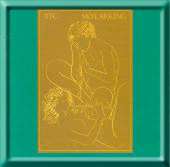
sonic richness, the presentation is as lavish and aesthetically pleasing as a
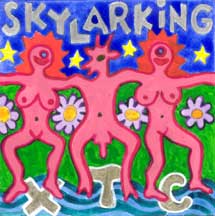
deb's frock: a gold hardback format, with Andy's original
“be-sure-to-wear-some-flowers-in-your-pubes” cover concept
reinstated.
But what of the music? I hedged my bets in the first sentence by
referring to it as the band's 1986 masterpiece... in the same way that Black
Sea is their 1980 masterpiece. Even with every gun in the world at my
head, I don't know that I could nominate just one favourite XTC album from that
peerless back catalogue but Skylarking is definitely up there. Recorded
between '85's Dukes Of Stratosphear mini-album 25 O'Clock and '87's
full-length Dukes outing Psonic Psunspot, Skylarking is largely
informed by the same awestruck psych impulses that animated XTC's Dukes
alter-ego: songs of Arcadian wonderment (‘Ballet For A Rainy Day’,
‘Grass’, ‘Season Cycle’, ‘Summer's
Cauldron’) and vividly realised poesy with a filmic sweep (‘The Man
Who Sailed Around His Soul’, ‘1000 Umbrellas’), mitigated by
intimations of disillusionment and doubt (‘Dear God’, ‘Big
Day’, ‘Another Satellite’, ‘Dying’).
Jesus, with such a staggering selection of songs, is it any wonder
no one noticed the polarity issue?
Marco Rossi
|
Shindig!
Quarterly No. 2
24th May 2011
[Thanks to Jamie Lowe]
 |
| |
|

|
 |
 
XTC -
SKYLARKING
Geffen,
1986.
Grupa XTC je najve ć a
"izgubljena" rok grupa, a album Skylarking je ako ne njihov
najbolji (konkurencija je velika), a ono je svakako njihov najzreliji album.
Producent Todd Rundgren je doprineo koheziji zvuka i aranžerskom
majstorluku, ali je čvrsta ruka ovog iskusnog majstora svakako doprinela i
tome da Skylarking sadrži manje ludila nego što ludila na
pločama XTC-a obično ima. Sve to zajedno zove se zrelost.
Glavni autor pesama je (kao i uvek) Andy Partridge, a
"sporedni" autor pesama je (kao i uvek) Colin Moulding.
Specifičnost ove ploče je veći broj Mouldingovih pesama
(nego obično) i njihov bolji kvalitet (nego obično).
Kao i na drugim izdanjima ove grupe, očigledni su uticaji Beatlesa
i Beach Boysa i vaskolike psihodelije šezdesetih (ali bez acida).
Tu je sve što treba da bude: elegantne melodije, neobični obrti,
plutajuća produkcija, zelena trava, šareno cveće,
voćnjaci (jabuke uglavnom), tirkizno nebo, ružičasto sunce, duga
preko čitavog neba, možda jedno strašilo daleko u polju...
Još od albuma English Settlement (1982) svi albumi su
konceptualni. Teme su ljubavne, porodične, pastoralne, religiozne...
što sve čini ovu ploču (to uostalom važi za čitav
opus ove grupe) atipičnim rok albumom. Duh XTC-a je bliži
duhu engleske poezije epohe romantizma nego grupi Rolling Stones (iz
moje perspektive, to bi bio najveći kompliment grupi XTC koji se
može dati).
XTC dolaze iz Swindona, grada na jugozapadu Engleske - iz srca
mitološke Engleske. U krugu od pedesetak kilometara je smeštena
većina drevnih zagonetki ove zemlje: Stonehenge, njemu sličan, manje
poznat a mnogo luđi Avebury, divovski crteži kredom na zelenim
brdima... ni kralj Artur i vitezovi okruglog stola nisu daleko. Sav taj
tajanstveni svet se ogleda u pesmama XTC-a, ali bez imalo mistike, bilo
čega mračnog, "darkerskog", što inače redovno
prati umetnička poniranja u daleku i nejasnu prošlost.
Ništa od toga - ovde sve puca od životne radosti i ljubavi,
slavljenja ciklusa vegetacije... a u sve to su udrobljene ironične
opservacije savremenog života. Magično, maestralno i jako moderno,
na svoj jedinstven način... i detinjasto, paganski nevino kako to samo
XTC umeju da urade.
Skylarking je idealna ploča da se sa njom dočeka proleće,
a kad zaduva vetar razvigorac, promenićemo ploću. Tada ćemo da
sviramo album Go2, a kada dođe mesec maj, pustićemo English
Settlement da nam svira. I sve tako, za svaku sezonu, za svaki mesec i za
svaku mesečevu menu - odgovarajući naslov, a sve od grupe...
XTC.
tekst napisao i omot oslikao: Saša
Markoviæ Mikrob
|
|
|

|
| |
©
www.harizma.com MMIV |
02.18.04
Skylarking
Posted in albums at 8:00 am by
Keith
After a long day at work, I wanted to relax near the stereo and listen to
some records. Browsing through my “T-Z” bin, I came across my
original LP copy of XTC's Skylarking. After dropping the needle, the
sound of crickets and summer came creeping through my speakers and the sound of
“Summer's Cauldron” took hold of the house, transporting us from
the cold Ohio evening back to 1986…

I was in New York City for the Christmas holiday. My brother and I were
staying with our sister, who had been living in Soho since the early 70s. We
spent large parts of our time (and Christmas money) at the many wonderful
record stores. In addition to Second Coming Records on Sullivan and Tower
Records on Broadway and 4th, we'd ultimately wind up at Rocks in Your Head on
Prince Street. A sub-basement store, they specialized in records off-the-beaten
track, plus classic NY Punk Rock and hard-to-find imports.
It was a cold winter evening in 1986 that I found myself looking for nothing
in particular at Rocks in Your Head. I hadn't seen anything interesting, and
the retro-punk on the stereo wasn't doing much for me. But what came next was
an epiphany.
If I could narrow it down to one thing, it would have been the overall
tonality of the music. I knew that sound. I couldn't explain what it
was, aside from simply saying “Todd Rundgren.” It was the sound of
Utopia, Todd's part-time band. There was something about the guitar that
recalled Deface the Music, their Beatles send-up LP (it must have been
the sound of Vox amps). The drums had that Todd sound too… the ringy
snare drum that was in your face (which I now realize was achieved with a
healthy dose of compression). But there was something else… the vocals
certainly sounded familiar.
“Who is this?”
“XTC.”
“Is it new?”
“Yeah, it's called Skylarking.”
I had been listening to XTC for only a few months. While at a summer music
camp in Cincinnati, a friend turned me onto albums like The Big
Express, and the classic Black Sea. I played cassette copies all
summer, and when I returned home I tracked down copies of Drums and
Wires and Go 2. But this was different… a heavy dose of
60s pop was evident. I had no idea they were moonlighting as The Dukes of
Stratosphear prior to this album. As the Dukes, they recreated that sound
perfectly. Now the influence of the Beatles, the Beach Boys and the Kinks were
oozing out of the grooves.
The store clerk pointed to the LP, on display on the far wall. I saw that
blue cover, with a sketch of a man and woman, probably naked, playing flutes in
a golden inset… very pagan. I flipped the cover over and saw the words
“Produced by Todd Rundgren.” Aha!
I bought it. I couldn't play it until I got home to Ohio, because there was
no way I would play this record on my sister's cheap record player (I
practically ruined a couple 45s the year before). I remember pulling the record
out during the Christmas day visit at my Aunt and Uncle's house. At least I
could read the lyrics, and enjoy the credits (they thanked The Dukes of
Stratosphear… little did I know they were thanking themselves). I
learned that Prairie Prince, who normally played drums for The Tubes, appeared
as “the time bomb.” Fitting, given that Todd had just produced The
Tubes' best album in years, Love Bomb.
When I finally got home, it didn't take long for me to play the record. I
had thought that upbeat rocker was the album opener, and instead I was greeted
with the summer heat medley of “Summer's Cauldron” and
“Grass.” I was hooked…
The record was in a particular order, following the season cycle and the
cycle of life through fourteen catchy songs. The opening songs set the
scene… love in the fields. Following it were songs of relationships and
courting (”The Meeting Place”). Then we had songs of the seasons
which were essentially describing the seasons of life: Just when I thought
that my skies were a June July blue / 1000 Umbrellas open to spoil the
view.
Side Two opened with the struggles of raising a family on “Earn Enough
For Us” and the joys of marriage with “Big Day.” Then the
album takes a dark turn with “Another Satellite” which addresses
extra-marital affairs. The death of Colin Moulding's father is the topic of
“Dying.” The album ends with pagan images of rebirth on
“Sacrificial Bonfire.” And the process begins again…
Change must be earnt
Sacrificial bonfire must burn
Burn up the old
Ring in the new
This is how I came to know Skylarking. Months later, when
“Dear God” became a hit, the record company decided to remove the
amazing “Mermaid Smiled” so they could fit on the controversial
single. When I heard the altered album, I was disappointed. The cycle was
broken. I never bought a copy of that one, even when it was issued on CD.
Instead, I found a UK import and bought the “Dear God” CD single.
It made more sense to me.
I found out later that Andy Partridge hated the record. Todd called all the
shots, deciding on which songs were to be recorded (and the running order of
the album) before the band even arrived to record. It may not represent XTC
accurately, but it's a damn fine album.
Eighteen years later… I'm showing my age. Compared to the pop music
of 1986 (Whitney Houston, Madonna, Robert Palmer), Skylarking seems to
be doing fine.
[Thanks to Keith Hanlon]
It.Arti.Musica.Rock
May 2002
XTC - Skylarking (1986)
di Nellogiovane
E' una teoria di folgorazioni (beat, psych, prog, new wave, punk), quello
che porta Andy Partridge (chitarra e voce), Colin Moulding (basso e voce),
Terry Chambers (batteria) e Barry Andrews (tastiere) a fondare gli XTC. E' il
1976, e siamo a Swindon, Inghilterra: tempo due anni ed escono lo scalpitante
White Music e l'irrequieto GO2. Il meccanismo però sembra non ingranare,
e Andrews abbandona. Lo rimpiazzerà il versatile chitarrista Dave
Gregory: è la svolta, la quadratura del suono. Di lì a poco
arriverà lo schizofrenico e strabiliante Drums And Wires (1979). In
seguito realizzano dischi strepitosi come The Black Sea (1980) o English
Settlement (1982) e non raccolgono che briciole di gloria. La fama di
meravigliosi perdenti di talento comincia a consolidarsi. Poi, quando le cose
iniziano a girare per il meglio, ecco la fobia da palcoscenico di Partridge a
rendere impossibili tournée e promozioni. E così arriviamo al
1986, quando - persa per strada la batteria di Chambers (che non sarà
mai sostituito stabilmente) - decidono di affidarsi al "mago" producer Todd
Rundgren per la realizzazione di Skylarking. Saggia decisione? Macché.
Una tragedia. Una iattura. A sentire gli acidi commenti di Partridge, dietro
ad ogni traccia si cela un compromesso, in ogni suono il fantasma
dell'intuizione originaria, la stessa tracklist pare sia dovuta passare per
tali alterchi e divergenze da uscirne malconcia e mutilata. E c'è da
crederci, così come c'è da credere che anche nel rock, a volte,
possano accadere miracoli: ogni volta che metto questo disco nel lettore,
infatti, nemmeno l'ombra di tanta tribolazione - anzi! - il meccanismo mi
sembra magia, l'incanto si ripete soave, l'architettura pop frizza duttile e
perfetta.
Summers Cauldron, ad esempio, sembra stata concepita, realizzata e posizionata
in apertura di scaletta per adempiere a precise funzioni ambientali:
l'impalpabile cicaleggio iniziale, immerso in quella crema elettronica che
tutto abbraccia, esige come un'atmosfera densa e rallentata, pur tra i
pungolamenti della chitarra cristallina e le carezze di quel coro
meravigliosamente beachboysiano... Il trapasso in Grass avviene senza
soluzione di continuità, ed è come tuffarsi in un prato di
soffici percussioni, all'ombra tenera degli archi in fiore (carezzati da un
venticello orientale), in una festa sensuale e avvolgente di colori, con la
compagnia degli odori, umori e ormoni del caso. Appena più aggressivo
è invece il piglio di The Meeting Place, che introduce uno strano
bestiario di effetti laterale, ma siamo pur sempre in una terra di mezzo tra il
McCartney più giocoso e il Brian Wilson più malinconico (o
viceversa), trainati da un alternarsi felpato di piano e sintetizzatore che
proclama Dave Gregory gran cerimoniere della situazione.
Il pop frizzante di That's Really Super, Supergirl rischierebbe di passare
inosservato se non fosse che — guarda un po' — non ha un pezzo
né un pezzettino fuori posto: chitarre e tastiere scivolano sui pensieri
come guizzi d'argento o riflessi di sole, i vocalizzi di Mr. Partridge sono
spigolature accorate mentre una prurigine di tastiere germoglia tra pennate
pungenti e percussioni briose. Ballet For A Rainy Day è invece un frutto
spurio dai tanti sapori, basso e piano sugli scudi, con quella dominanza swing
aperta alle più struggenti escursioni melodiche e la benedizione di un
bridge straordinario (roba da costruirci una canzone tutta intera). E proprio
all'anomalia "estrema" della pop-song alta, con il pensiero ed il cuore rivolto
a Yesterday, guarda il tepore febbricitante di 1000 Umbrellas, pazzesco
errebì per archi e voce, tanto sprezzante nei versi quanto lirico nel
chorus: basta sentire come vibrano e lacrimano e sghignazzano e ammiccano
quelle corde per convincerci che si tratta — sotto tutti gli aspetti
— di un capolavoro.
Il cuore del disco è affidato ad un trittico portentoso: Season Cycle
(umorale, umoristica e swingata, con un backing vocals che estasierebbe i
migliori CSN&Y), Earn Enough For Us (un riffare più spesso e
crepitante che anticipa in qualche modo la svolta dei Rem di lì a poco)
e l'esplosione lisergica di Big Day (non fosse che per lo svolazzare argentino
delle sei corde, o per l'incedere nebbioso della linea melodica, replicherei
l'ascolto fino a struggermi nella più intrigante delle dolcezze).
Segue la new wave di ritorno di Another Satellite, che ridisegna le inquietanti
traiettorie di Wire e Joy Division nell'ottica di una visionarietà
cangiante e lieta (quello stillare di vibrafono, quel basso pigro,
l'incresparsi rigoglioso del synth...). E poi c'è Marmaid Smiled,
delirio caparbio e versicolore, gagliardo innesto tribal-jazz su vibrante fusto
pop, l'arrotarsi inesauribile di genio e misura, ottoni (finti), vibrafono
(finto?), il basso (cazzutissimo) e una batteria in punta di bacchetta (non
l'ho ancora detto, è Prairie Prince) attorno alla duttilità
prodigiosa del canto.
Rimaniamo nei paraggi di un certo jazz (quello irrequieto, levigato e fumoso
caro a Joe Jackson) con la successiva The Man Who Sailed Around His Soul (legni
in evidenza, percussioni insidiose, piano letterario, chitarra stellare),
mentre Dying è una ballata sghemba che recita la sua amarezza inquieta
senza rinunciare ai segni e ai timbri della magia (il caracollare fibroso della
ritmica - come un meccanismo inceppato - e la vaporosa stratificazione del
canto di Moulding). Chiude il disco il valzer incantato di Sacrificial Bonfire,
ancora miele per timpani insoddisfatti, la tenera spirale delle corde, quella
voce arresa alla malinconia, un vibrare caldo di pelli tese, il rosseggiare
nostalgico degli archi sulle tracce invisibili di un cuore nudo: il nostro,
finalmente.
Virgin (Denmark)
2001
Skylarking af XTC
1986
XTC var et band der skrev sange der måske var for gode til radio. Det
engelske band har lavet en lang række gode plader op gennem
80´erne, og mange af deres numre er sidenhen blevet indspillet af andre,
bl.a. Crash Test Dummies har stor forkærlighed for bandet, der stadig
styres af sangeren Andy Partridge.
Han har i næsten 20 år haft sceneskræk, og derfor er bandet
aldrig nået længere ud end deres trofaste publikum på et par
hundredetusinder verden over. Synd og skam for sangene er ganske enkelt
fremragende.
CNY Music & Art
August 2001
Non-Local Pick of the Month
British trio XTC went for the brass ring with their 1986 release,
Skylarking. The band, comprised of Andy Partridge on lead vocals and guitars,
Colin Moulding on vocals, bass and other effects, and Dave Gregory on vocals,
guitar, piano, keys and other sounds. The band teamed up with musical maven
Todd Rundgren, who produced their most cohesive album. The songs are very
British, all too often sounding like a Beatles album, but still has enough of
XTC's own style to feel less like plagiarism, and more derivative. Often
described as a "perfect summer's day", Skylarking remains XTC's
biggest album to date. What could be more appropriate than to have Skylarking
appear as the August Classic Disc.
The disc opens up with "Summer's Cauldron", a song that completely
sets the tone for the rest of the disc. The song opens up with the looped
rhythm of crickets and birds and other natural sounds, and leads into a joyful
reminiscence of picnics in fields and strolls by still lakes. The song serves
as an intro to the following song "Grass". The thumping drums and
piano help to deliver lyrics like
When Miss Moon lays down
And Sir Sun stands up
Me I'm found floating round and round
Like a bug in brandy
In this big bronze cup
Drowning here in Summer's Cauldron
Trees are dancing drunk with nectar
Grass is waving underwater
Please don't pull me out this is how I would want to go
Insect bomber Buddhist droning
Copper chord of August's organ
Please don't heed my shout I'm relax in the undertow
"Summer Cauldron" is Andy Partridge's ode to summer. The song
serves as an overture to the next two songs. "Summer's Cauldron"
segues perfectly into a song called "Grass", which is Colin
Moulding's take on high-noon in the summer. The lyrics reference things as
innocent as buying ice cream cones and as obscene as flattening the clover. The
song is a quick but well written tune that incorporates a good melody with lazy
acoustic guitar and percussion. The song ends with the same rhythm of birds and
crickets.
Part of the melody of "Grass" can be heard in the following song,
"The Meeting Place." The song switches gears, from a natural setting,
to an industrial setting. "The Meeting Place" has a loop of factory
noises running underneath it. The theme of this song is identical to
"Grass", in that it describes sneaking in a quick shag. This time,
the scene describes a couple who work together sneaking out of work to have a
go. One of XTC's strongest musical traits has been their ability to back
extremely graphic stories with extremely innocent sounding arrangements.
The album plays out in little clusters of songs. The opening trio of songs
are linked musically and thematically. One of the few songs that stands on its
own is "That's Really Super Supergirl", which is, in essence about
the life of a superhero's spouse. The song is a cleverly written rocker that
combines great keyboard effects with strong drumming to drive the message of
Andy Partridge's words.
The next cluster of songs deals with weather (sort of). This trio opens with
"Ballet for a Rainy Day", which is Andy Partridge's descriptive take
on the best of a rainy summer day. This piano heavy song contains wonderful
harmonies and one Colin Moulding's nicest bass lines. The song totally feels
like a rainy day on some boardwalk/carnival. Like the first two songs on
Skylarking, "Ballet" segues directly into "1000 Umbrellas".
Like "Ballet" the title for "1000 Umbrellas" implies
weather. However, the umbrellas in this song are used as metaphorical imagery,
deflecting a rain shower of tears from a heart-broken man. Musically, the song
is one of the best on Skylarking. There is an incredible string-quartet
arrangement, by Dave Gregory, on this tune that runs around the entire
song.
The end of the "Weather" trilogy arrives with the Beach Boys
homage, "Season Cycle". If ever there was a song worthy of being
called an outtake from Pet Sounds, this is it. The song contains the dreamy
harmonies of classic Brian Wilson songs, as well as Beach Boy flavored calliope
and piano. The highlight of the song comes from the rhythm section, though.
Colin's bass line and drums from Prairie Prince are super energetic, adding a
rocking edge to the song that help elevate it from the chance of being a Beach
Boys rip-off.
The second half of the disc opens with the strongest track on the disc,
called "Earn Enough For Us". This is a fast paced tune with heavy
drums, ringing guitars and Beatle-esque bass. The song tells the story of a
man's struggle to provide a future for his lover. As in
Found a house that won't repair itself
With its windows cracking
And a roof held together with holes
Just because we're at the bottom of the ladder
We shouldn't be sadder
Than others like us
Who have goals for the betterment of life
Glad that you want to be my wife, but honest
I've been praying all the week through
At home at work and on the bus
I've been praying I can keep you
And to earn enough for us
Producer, Todd Rundgren's influence is very heavy in this tune, adding a
certain amount of psychedelia.
Where "Earn Enough For Us" talks of building a future together,
the following song, "Big Day" flashes forward to a couple's wedding
day. The song's cynical attitude toward marriage is a stark contrast to
"Earn Enough", yet the music accompanying this sentiment cushions the
blow. As with "Earn Enough", "Big Day" has psychedelic
elements to it.
The pallet is cleared with the next two songs, which are stand-alone tracks.
The first, "Another Satellite" is a simple song, relying on a looped
synth-drum track and long, sustained chords as the backdrop for Andy
Partridge's heavy, echo-effected melody. The second of these brilliant
stand-alone songs is the jazz/lounge song "The Man Who Sailed Around His
Soul". The song is a beatnik's dream of a metaphorical quest; and oceanic
voyage of self-discovery. The song is heavy in bass, bongos and flute to begin
with, but jazzy piano and drums join in before the big band kicks it all up a
notch.
The most controversial song on the album is also the one that may be most
responsible for this album's success. "Dear God" is a discourse on
the chicken-and-the-egg theory. The song opens with an acoustic guitar and the
voice of child singing the lead vocal, hauntingly stating:
Dear God,
hope you got the letter, and...
I pray you can make it better down here.
I don't mean a big reduction in the price of beer
but all the people that you made in your image, see
them starving on their feet 'cause they don't get
enough to eat from God, I can't believe in you
The rest of the band bursts in, and Andy Partridge takes over the vocal to
expand on this sentiment. The song ends with Andy's last line "If there's
just one thing I don't believe in," being answered with the child's voice
quietly saying, "It's you. Dear God." Andy's real purpose of the song
is to dispel people's notions that God is an elderly man with white robes and a
beard, dictating Man's every action. Andy wanted to alert mankind to their own
apathy and responsibility to make things better. Religious groups all over the
world were up in arms over the atheistic overtones in the song.
"Dear God" starts off the last song-theme on the album; the final
chord runs right into "Dying", a song about an elderly woman's
demise. The song, written by Colin Moulding has some of the same chords as
Andy's "Dear God", and the band plays up on the similarities. The
death theme carries over into the final track, the Olde-English flavored
"Sacrificial Bonfire". As with many other songs on the disc, the
playful music joyfully sings the delights of burning a heretic.
XTC's career after Skylarking has never been as successful. The band has
enjoyed minor success with the albums Non-Such, and the Apple Venus volumes One
and Two, but have not been able to capture the attention of the mainstream
audience. The quality of their music has certainly never diminished, but they
have not been able to recapture the sheer brilliance of Skylarking. The album
combines straight out rock with beautiful arrangements and harmonies, to create
something truly unique. As it's been stated before, Skylarking is a perfect
summer's day.
Review by Michael Haight
|
Birmingham Post
May 26, 2001, Saturday
CD REVIEWS: ROCK & POP
by Andrew Cowen / Alison Jones
REISSUES OF THE WEEK
XTC Skylarking (Virgin): Just one of a raft of reissues
of Swindon's finest for the Virgin label, Skylarking is, along with
Apple Venus Vol 1, undoubtedly their masterpiece. Perversely, it's the
album which almost caused a collective nervous breakdown with in-studio
fisticuffs with producer Todd Rundgren. It's the American's Phil Spector-esque
wall of sound that lifts the album into the realms of the classic, although
without the songwriting strengths of Andy Partridge and Colin Moulding it would
be a different story. Skylarking sees XTC's folksy Brit rural muse at
its most effective on a Beatley song cycle celebrating the wonders of British
summertime and its associated whimsy. Definitely a hymn to a bygone age, you
can almost smell the hedgerows on cuts such as Season Cycle, The Meeting Place
and Ballet for a Rainy Day. The hit single, Grass, is one of Moulding's most
whimsical tracks, but also one of his finest, topped only by the stunning Big
Day later on the album. With some seamless editing, much of this is in the same
league as side two of the Beatles' Abbey Road. All the XTC albums have
been digitally mastered and there's a batch of Japanese imports in the shops in
cute cardboard LP sleeve replicas. Rating: HHHH
Copyright 2001 Midland Independent Newspapers plc
[Thanks to Wesley Hanks]
Das Kultursyndikat
circa 2000
|
XTC - skylarking (Virgin - 1986)


Natürlich. XTC in ihrer mittleren Phasen, und alle reden davon, wie
schön diese Band eine Melange aus dem Sound der Beatles und der Beach Boys
erschafft. So ein Unverständnis!? Einflüsse der beiden großen
Bands sind zwar nicht zu leugnen, doch darf man sie nicht
überschätzen. XTC laben sich gerne am Sound der Sechziger, doch sind
sie auch immer Kinder ihrer Zeit, oder auch dem was später kommt. In den
Achtzigern zeigten XTC ohne viel Federlesens, wie man eine Popplatte ohne einen
übermäßigen Elektronikfuhrpark erbauen kann. So zum Beispiel
auf diesem Album, "skylarking", welches 1986 geschaffen wurde. So wie es damals
XTC vormachten, hören sich heute, vierzehn Jahre später, Haufen an
unglückseligen britischen Quasipop-Bands an, nur schlechter, ergo
ideenloser. Man übertreibt nicht, wenn man festhält, daß Andy
Partridge und Colin Moulding, die großen Köpfe der XTC's, Propheten
sind.
Für "skylarking" tat sich das Trio, zu Partridge und Moulding
gehörte noch der Multi-Instrumentalist Dave Gregory, mit dem
amerikanischen Produzenten Todd Rundgren zusammen. Heraus kam ein Album, das
zunächst recht unspektakulär wirkt, und für die
Verhältnisse XTC's sogar recht unbritisch. Doch dieser Eindruck
täuscht, wenn man sich auf die Platte einläßt und ihr eine Zeit
der Reife einräumt. XTC-Songs kommen aus dem Hinterhalt, sie sind nur
selten sofort konsumfähig, daher gelangen den Briten auch nur selten
Hitsingles, was jedoch der Qualität nicht entgegenwirkt. Fein ziseliert
kommen die Songs daher, wie barocke Geschenkpackungen mit feinem Inhalt. Nun,
nicht alle Songs sind letztendlich Zuckergebäck, dieser Einwand sei
gemacht, doch erfreut das Album immer wieder und mit der Zeit auch immer
mehr.
Richtig erhebende Klasse erlebt der Hörer dann im Laufe der zweiten
Vinyl-LP-Seite. "the man who sailed around his soul", "dear god" und "dying" im
Trio aneinandergereiht gehören zum Besten, was bis heute unter dem
Bandlogo veröffentlicht wurde. Ein Fest, bei dem man viele
zeitgenössische Popplatten verbrennen könnte. Die Wucht in die sich
"dear god" hineinsteigert, die quasigroovende Gelassenheit des "man who...",
die innere Abgeschlossenheit aus der "dying" ausbricht: Lehrstücke sind
das, musizierende Völker! Nennt mich einen weltfernen Spinner, doch ich
habe Nektar und Ambrosia genascht, mein ist das letzte Lachen. Ich werde es mit
Andy Partridge teilen.
|
Candidate
circa 2000
Recordbox
XTC: Skylarking
OH, it was obvious after Britpop (and Blur stealing the whole of "Black
Sea" for "The Great Escape") but XTC are brilliant. It's very
unfashionable these days, but sometimes you just need loads of really great
melody lines. Like "Rubber Soul", this record is just full of
whistling moments. Bathtime, walking-the-dog, alone-on-the-beach sort of hums.
That's what the finest British pop craftsmen have always done, and this will
always be the soundtrack to a fantastic holiday. So summery they spent a
fortune recording crickets and birdsong to overdub, and, despite "Love On
a Farmboy's Wages" not being on this (it's on the otherwise a-bit-rubbish
"Mummer") the folkiest XTC album of the lot. (All the melodies sound
like a peal of churchbells, and that's surely the mark of BritFolk
quality...)
(Every time I think of a really great tune, I usually find out it's already
on this record.) J
[Thanks to Joel Morris]
Cosmicben's Record Reviews
circa 2000
It's all that and a bowl of Count Chocula
* * * * XTC: Skylarking (1986)-- Pretentious perfection; I like it, but
I still can't figure out what the point is. Skylarking is a beautiful suite of
14 songs, each of them entirely memorable--after just a few weeks of occasional
listening, the refrains of each of these songs has run through my head at least
once while I'm walking to class or talking to someone especially boring. In
addition, the melodies are exquisite and the lyrics range from creepy ("Another
Satellite") to brilliantly clever ("That's Really Super, Supergirl") to even
poetic ("Summer's Cauldron"), as much as I hate to admit anything good about
rock lyrics. The instruments are impeccably played, with head honcho Andy
Partridge playing nice fills on guitar, Dave Gregory adding tasteful and
inventive synth parts, and Colin Moulding earning his keep on the bass (at
least, I assume so--my stereo sucks). In addition, studio whiz kid Todd
Rundgren gives each song a glossy sheen and lots of intriguing sound
effects--check out the bee buzzing its way across your headphones during
"Summer's Cauldron"--and studio cat Prarie Prince does a capable job on the
drums (XTC's drummer quit once they stopped touring). The album's sound ranges
from eerie to calming, and still always makes sense. By golly, something
should be wrong with this record--and there is! For one, I can't stand any of
the vocals: Partridge is grating (if competent), and Moulding is just
annoying--his sneering even manages to negate the irresistable piano riff of
the album's closer, "Sacrifical Bonfire." But the main reason I find it hard to
love this album is the sheer ego involved, and I'm not even talking about
professional egomaniac Rundgren. The three chaps in XTC know they're melodic,
they know they've mastered the studio, and they know they can imitate their
sixties idols, but in the end, that's all it is: a soulless imitation.
Partridge can create a tuneful Beach Boys homage/ripoff with "Season Cycle,"
and make it bouncy and memorable and nicely harmonized, but without any
humility in the mix, it's ultimately off-putting. Imgine Brian Wilson or Paul
McCartney if they didn't constantly worry about whether the public would like
their records--instead of cruising through Hawthorne or Liverpool and getting
ecstatic when their song came on the radio, they just sat in the studio
expecting the great reviews to roll in. That's why I can't see the bouncy "Earn
Enough For Us" as a great rocker--it's merely a great studio creation and
nothing more. That's not to say that this isn't a good, solid album: engaging
songs abound, from "Another Satellite" (which sounds like late-period Police)
to Moulding's orchestrated "Grass" to the big atheist single "Dear God"--but
even there, you can hear Partridge trying his best to sing with a "gritty,"
"impassioned" voice and write about things he really "cares" about, and
ultimately failing. To be fair, I really enjoy this album, but I'm holding out
hope that their earlier rockin' stuff is more sincere. 'Cause for now, they
don't even seem like a real band to me: just a tuneful, professional facsimile
of one.
Your comments:
taosterman@yahoo.com (the incomparable Rich Bunnell): Well first
off, I'm surprised you can tell apart Partridge's and Moulding's vocals! Maybe
it's because I started out with the early stuff but I found them barely
discernable at all until someone told me Moulding sang his own songs-- now the
distinction is obvious to me (Colin's voice is much lighter). As for the
"annoyance" factor, I admit that their voices originally annoyed the crap out
of me but they really grew on me since they're really distinctive and can carry
a melody-- I mean sure, we could have some slick guy with a great voice singing
these songs but then they'd sound almost completely anonymous! On the
"imitation" thing, I don't see very much imitation involved aside from the two
songs you mentioned and "The Man Who Sailed Around His Soul"(fairly generic yet
catchy beatnik cool jazz)-- in fact, the band barely ever pulled from its
predecessors elsewhere. The one major exception, of course, is the "Chips From
The Chocolate Fireball" album (or collection) they recorded as the Dukes Of
Stratosphear-- try to find that one; it's derivative, but that's the whole
point of the project, and it's really, really fun. And on the "doesn't sound
like a real band" factor---well, yeah, that's part of being a studio-only band.
These songs weren't made for live shows due to Partridge's stage fright and
thus they took full advantage of the studio. The early stuff definitely is more
sincere since they used to do the exact opposite thing; i.e. only make a song
if it CAN be played live without a hitch. Check out "Black Sea," that's
definitely their most consistent early-period album-- and try to let
"Respectable Street" grow on you because it's an excellent song once you get
used to the clangin' gee-tars. One last note: Partridge really DOES care about
his athiest beliefs which he expresses in "Dear God," but he feels that the
song is a failure lyric-wise because he's, to quote Partridge himself, "trying
to sum up such a broad topic in a mere 3 1/2 minutes." Maybe even that's a
little pretentious, but at least Partridge acknowledges that the song has a
lyrical lapse.
Music.com
circa 2000
COLUMN
by John D. Luerssen
Alt Rewind:XTC:Skylarking
The clever and infectious post-punk innovators in XTC emerged during the
late 1970s as a quirky, eclectic pop band. With irresistible early singles like
"This Is Pop," "Making Plans For Nigel," and "Generals And Majors" best
exemplifying this point, the group soon grew away from new wave and evolved
into an art band. A 1982 double-LP, English Settlement, made them bona
fide stars in their native England and widened their US fan-base courtesy of
one great single, "Senses Working Overtime," but the effort was structured
around intricate arrangements that took some getting used to. Acclimated fans
embraced both 1983's Mummer and 1984's The Big Express, which
continued to lay the experimental-pop foundation that would be beautifully
realized on their 1986 masterwork, Skylarking.
Although the sessions were recorded under strenuous circumstances, with
producer Todd Rundgren frequently at odds with frontman Andy Partridge, the
album was immediately heralded by critics upon it's release as a classic.
Despite such accolades, XTC spouted off in interviews about their
dissatisfaction with the results of Skylarking. Perplexed disciples
disagreed with the trio, finding it to be the act's strongest accomplishment to
date.
In a strange twist of events, the album's most successful excerpt, the
scathing and controversial "Dear God," was originally relegated to B-side
status, and left off of original pressings of the disc. When adventurous radio
personnel flipped over the world-weary pop single, "Earn Enough For Us," they
got instant audience reaction. The sudden popularity prompted the opportunists
at Geffen to add the song to all future versions. Note: Most true audiophiles,
in attempt to preserve the track listing as originally intended, prefer to
reprogram the CD to play the song first, before venturing into the pastoral,
Beatle-esque elements of Skylarking.
Thirteen-plus years after release, repeated listens still confirm nearly
every song is a triumph: "Big Day" addresses wedding day jitters with trippy
accompaniment; "That's Really Super, Supergirl" is a perfectly-penned,
infectious love song; Rich orchestration supports "Sacrificial Bonfire" while
"Another Satellite" is subtle and contemplative. The bizarre-but-fascinating
disc opener, "Summer's Cauldron," effortlessly slides into the set-highlighting
tribute to "Grass," the kind you smoke and the kind you lie in. Other top tunes
include are the harmony-drenched "The Meeting Place" and the thought-provoking
"Ballet For A Rainy Day."
With the flawless musicianship of singer/guitarist Partridge, bassist/singer
Colin Moulding, and the multi-instrumental talents of Dave Gregory, XTC
delivered an album like no other. Skylarking ranks among the best rock
albums of all time, and in the alt-pop subgenre, it may be the best that we
have.
© 1998-2000 Music.com, Inc. All Rights Reserved.
Space Ghost
January 7, 2000

XTC Skylarking UNI/Geffen
Do you know what Zorak hates? Mamby pamby music made in a
time when everything is supposed to be better. Zorak does not like R.E.M. with
the bald weirdo flailing about and is irked when no one offers alternatives in
modern times. Where is the Boston or Uriah Heap of today Zorak ponders out loud
while making a hair and toenail pie for Space Ghost's Wednesday night Rook
party. That is why I offer the XTC. It is the only letter band Zorak can
listen to without spitting on the nearby person. XTC has its claws on the
pulse of music throbbings. I am going to steal DNA from XTC and Public Enemy
and Boston and Uriah Heap and Henry Rollins and make a true rock god. You will
all dampen your khakis. Pfft.
|
|
 |
 |
TM & © 2000 Cartoon Network. All Rights
Reserved.
[Thanks to Peter Mullin]
El Intruso
1999
Servicio al navegante:
Allí, en el cielo, es un ave, un
avión... no, es XTC!!
Horacio Magnacco
® El Perseguidor
Hoy le toca el turno a uno de esos discos para la mesita de luz, esos que nos
sacan una sonrisa de alegría cada vez que los oímos.
Se trata de Skylarking de la banda británica XTC.
Comencemos hablando de los artistas: Los orígenes los podemos encontrar
en un trío llamado Stiff Beach, formado en 1970, quienes se encargaban
de explicar que sus influencias iban desde Dyango Reinhardt, pasaban por Sun
Ra, para detenerse en el Captain Beefheart. Su líder, Andy Patridge,
formaría varias bandas por el estilo, con diferentes nombres, hasta que
en julio de 1975 deciden nombrarla XTC.
Bajo éste nombre, Colin Moulding, Dave Gregory y el mencionado Patridge
realizaron a partir de esa fecha una serie interminable de shows y demos para
compañías varias, sin resultados a la vista. Recordemos que por
esos años el punk era la medida, y XTC no estaba demasiado alejado de
ella, de hecho surgió un slogan que rezaba XTC R NRG, acorde a lo visto
en los escenarios.
Recién en 1977 logran un contrato con Virgin y graban su debut.
Varios discos y años después, en 1985, contactan a Todd Rundgren,
un conocido solista, guitarrista, arreglador, tecnócrata y , en
apariencia, bastante chiflado, con el que acuerdan la producción de su
próximo disco.
Rundgren realizó producciones propias (tiene más de doce discos
propios), y para bandas de la talla de Badfinger (Straight Up - 1970), Grand
Funk Railroad (We´re an american band - 1973), el albim debut de The New
York Dolls (1973), y demás.
Skylarking contiene momentos espectaculares, como Ballet for a rainy
day, Sacrificial Bonfire, las exquisitas orquestaciones de 1000 umbrellas, las
estrofas de Dear God (I can't believe in you), las sutilezas de Grass, o el
tributo a los mejores momentos del pop, como Season cycle y Earn enough for
us.
Al parecer, durante la grabación, los músicos y su
excéntrico productor discutieron ... un poco, lo que generó que
Patridge se hiciera cargo de la produccón en las ausencia de
Rundgren. El productor no la hizo facil y salió a hablar pestes de la
banda a cada micrófono que se lo posibilitara.
Sin lugar a dudas, Rundgren y XTC y su relación hicieron posible que
Skylarking sea uno de los grandes momentos de los manoseados 80´s.
Recomendado escucharlo de un tirón en un viaje en tren.
The Gallery of Indispensible Pop Music
circa 1999
The Inner Sanctum
XTC -
Skylarking |
This isn't even my favorite XTC album. But I have to acknowledge that it's the
most consistent, and probably even the best. I have only my own taste to blame
here. This is a fine jumping-in point for a major body of work that can be
intimidating to latecomers in terms of its sheer size. Beautifully cohesive
(with the slightly jarring exception of the surprise hit Dear God, added
late in the game) and gorgeously arranged, Skylarking just feels like summer.
Not the Beach Boys sort of summer, but the kind the rest of us live; life goes
on, it's just more languid. 1,000 Umbrellas is one of the best breakup
songs ever written. The rest of them were probably also written by Andy
Partridge.
|
[Thanks to Elizabeth S.]
Chapters.ca
1999
Skylarking
XTC
XTC trade in their post-punk quirkiness for a brand new sound and an
entirely different vision. Instead of quick, seemingly unrelated pop songs,
Skylarking is a sprawling, thematic venture, full of surprises
and texture. 'Ballet For A Rainy Day' justifies the Beatles comparisons, but
it's songs like 'Grass' - a lucid tune about young love - that proves XTC
consistently forge new ground on their own merit. Todd Rundgren manned the
production booth, introducing strings, horns and a sense of revitalization into
an already innovative group.
Jeff Partyka's Mega-Music Page
1998
 XTC's Skylarking: Ballet For A Summer's Day
Utter the phrase "Eighties music," and most people will likely think of one
of two things: the Bruce Springsteen/Michael Jackson/Purple Rain/MTV
American "superstar" side, or the synth-driven, brightly-clothed Europop
offered up in droves by acts such as Culture Club, the Thompson Twins, the
Human League and (in his Let's Dance/Tonight incarnation) David Bowie. I
suppose it's predictable, given my general prejudice for Sixties music, that my
favorite album of the Eighties was more or less an anachronism. . .a
sonic throwback to the sound and spirit of mid- to late-Sixties pop as
epitomized by the Beatles, the Beach Boys, the Kinks, the Small Faces and
others. XTC's Skylarking sounds more like 1966 than 1986, the year of
its release. . .or for that matter 1976, the year of the punk
revolution that ushered in the "new wave" movement through which XTC first made
a name for itself.
The first place I ever heard of Skylarking was in the pages of the
May 1987 issue of Stereo Review magazine, which featured Steve Simels'
album review as the lead piece in the "Best Recordings of the Month" section.
What caught my eye was Simels' likening of the album to the Beatles' Sgt.
Pepper, calling it "an out-and-out homage to what the Beatles and George
Martin wrought back in the Summer of Love," "an utterly fab record on its own
terms," and "the great pop album that some of us figured XTC always had in
them." It's a brief piece (three paragraphs) that mentions only one of the
album's songs, "Earn Enough for Us," which Simels calls "a marvelously deadpan
working-class lament that should be a hit single, sound[ing] suspiciously like
a Bruce Springsteen song as it might have been arranged and produced by Paul
McCartney in 1967." I was 14 when I saw Simels' review; having been a Beatles
fan since the age of 3 (as well as a recently converted fan of Springsteen's
and a young MTV viewer who'd seen and rather enjoyed XTC's "Senses Working
Overtime" video back in '82), I was immediately sucked in. I showed the review
to my father, a fellow Beatles fan, who decided to check out Skylarking
along with me. It was he who purchased the LP (I didn't get my own copy 'til I
bought the CD a few years later).
We went downstairs, put it on the turntable, and listened. (He rejected my
idea of going right to the beginning of Side 2 and "Earn Enough for Us,"
predicting correctly that Skylarking would be the kind of album one
should listen to straight through, in the proper order.) Dad seemed more or
less disappointed; he decided that XTC sounded nothing like the Beatles, apart
from the very White Album-ish violins that segue "Ballet for a Rainy
Day" into "1,000 Umbrellas." But I was spellbound. I immediately loved the
opening medley of "Summer's Cauldron" and "Grass," and "Ballet for a Rainy Day"
sounded gorgeous and melodic, and "Earn Enough for Us" (for me) lived up to its
promise and then some . . . and the album as a whole sounded magical.
It's never worn off; Skylarking has consistently remained an all-time
favorite for me, and it sounds better every time I listen to it. I'm always
surprised by subtle touches in the arrangements that I've forgotten or even
missed, spot-on lyrics that haven't hit me before, Colin Moulding's beautiful
bass lines . . . this is an album with many treasures in sound,
spirit, and soul, just waiting to be discovered.
Put simply, Skylarking sounds beautiful. Discussing the Beach Boys'
"Heroes and Villains" in his book Rock & Roll: The 100 Best Singles,
Paul Williams writes that the song "sounds like a running brook." I agree with
him; that song has always reminded me of nature, of the outdoors. It certainly
has nothing to do with the lyrics; there's something about the overall sound
conjured up by the Beach Boys and their engineer that makes the record seem
more like the result of an act of nature than an act of songwriting or
recording. Skylarking achieves something similar across a full-length
album, but in different ways. In a promotional interview conducted just after
the album was released, Andy Partridge repeatedly refers to it as a "summery"
album. The music very tangibly exudes a feeling of summertime, partly and most
obviously (but not solely) through some of the lyrics. Partridge's "Summer's
Cauldron" and Moulding's "Grass" contain overt lyrical references to summer
but, more than anything, that intoxicating "buzzing" rhythm track really
achieves a remarkable evocation of the heat and laziness of summer. The cool,
wet rains of the season are represented by "Ballet for a Rainy Day" and "1,000
Umbrellas," another pair of "musical Siamese twins" (as Partridge refers to
them) that work musically and lyrically to heighten the album's evocative
effect.
The album is based on the brilliant songs of Partridge and Moulding, but
instrumentalist Dave Gregory, the one non-songwriting member of XTC (who,
sadly, left the band in early 1998), contributes greatly to the record's
success. It's his deft touches that make many of these arrangements sparkle
(the little lead guitar lines in "Grass," the piano in "Ballet for a Rainy
Day," the string arrangement in "1,000 Umbrellas"). Partridge, as ever, shines
vocally, while Moulding. . .with his higher-than-usual number of
tracks. . .provides variety as well as his usual solid, attractive
bass lines.
XTC have given us many more fine songs since Skylarking, but they've
never again succeeded in crafting such an evocative, enjoyable experience of an
album. I'm a huge fan of the band's but, as much as I would like to believe
that XTC could make an album like this in their sleep, it's obvious that
producer Todd Rundgren deserves a great deal of credit for Skylarking's
achievements. Stories of Partridge's volatile working relationship with
Rundgren are legendary in XTC fan circles, but for us listeners any strife was
well worth it. As much as I love the rest of the band's output, I don't think
they've ever made an album so pure, so bereft of filler, as this one. (The one
possible exception, 1987's incredible John Leckie-produced Psonic
Psunspot, was credited not to XTC but to the Dukes of Stratosphear, their
psychedelicized alter egos who also have the pre-Skylarking EP 25
O'Clock to their credit.) It was Rundgren who devised the album's summery
theme (he's credited on the inner sleeve for creating the "continuity
concept"), who hand-picked and sequenced the songs from the more than 30 demos
Partridge and Moulding gave him. His work in this area alone is a model of
creativity and innovation, and even Partridge later admitted his admiration of
Rundgren's work on the record. So my hat's off to you, Todd . . . and
to you, Andy, Colin, and Dave, for Skylarking.
this essay © 1998 Jeff Partyka

November 1998
By Royce Bardon
Reproduced by permission
 ne of the best post-Beatles pop albums. Superbly produced by
Todd Rundgren, Skylarking proves that XTC took their
Beatleslessons very seriously. Andy Partridge, Colin
Moulding and Dave Gregory write and sing about marriage, "Big
Day", sunny youth, "Grass", a creator, "Dear God" and growing old on
"Dying". All this is wrapped in a buoyant, spirited, shimmering pop
production. ne of the best post-Beatles pop albums. Superbly produced by
Todd Rundgren, Skylarking proves that XTC took their
Beatleslessons very seriously. Andy Partridge, Colin
Moulding and Dave Gregory write and sing about marriage, "Big
Day", sunny youth, "Grass", a creator, "Dear God" and growing old on
"Dying". All this is wrapped in a buoyant, spirited, shimmering pop
production.
If you can imagine a complex work, with strings, various electric
instrumentation and multi-layered vocals coming across as totally sincere and
tasteful than you have a feel for what Rundgren accomplishes on
Skylarking.
In essence, Skylarking is a conceptual work about life in its many
stages and details. It sounds like heavy going, but it's actually wildly
entertaining. In simple terms it's just about impossible to dismiss
Skylarking. A must have? If your taste runs to impeccably performed and
arranged pop music, a resounding yes! |
Homeless Page
Written in June 1998
by Stanislav Zabic
XTC:
Skylarking
One of the best records I've ever
heard in my life! And I'm not overjudging! Very, very near to the perfect.
Excellent songs, but above all great packing! The album is produced by Todd
Rundgren. Although all songs were written by Moulding and Partridge, Todd's
influence is so big that I have a feeling that he is the one of the authors
too! It's really hard to make an exception on any song from this album, but let
me try. Maybe the best part of the album is "1000 Umbrellas" and "Dear God".
This may be the best album that XTC ever did, so try to find it somewhere,
satisfaction guaranteed.
LM
circa 1987
Never in their long a distinguished career have XTC made a duff record.
They've made a few mediocre ones (Mummer was a tad patchy and English
Settlement rambled uncontrollably at times), but they've always managed to
slip one or two glistening gems into each LP while keeping the quality control
set high for all tracks.
But despite their laudable attention to detail XTC have outlived their
usefulness. When they perfected their distinctive and intricate blend of
student pop (best highlighted on the classic Black Sea LP) they were
already six or seven years out of date; now they're beginning to sound
senile.
Still, Skylarking is a good LP, and its thematic approach is
intriguing. The opener, Drowning In Summer's Cauldron [sic],
billows in on banks of clicking crickets and modulating synths, producing a
perfect picture of a heady, brow-mopping July afternoon in the countryside.
Just as you're about to drift off, the track segues effortlessly into
Grass. Romantic rustic themes swirl and twirl as the song develops,
finally fading into a reassertation of the opening cut. Pretty conceptual,
man.
Ballet For A Rainy Day pulls us quickly into the autumnal glory,
while 1000 Umbrellas shivers as the November heavens open, pouring
discontent into a dying year.
Season Cycle - a bit of a corker - questions the natural powers that
govern our lives, and reinstates the pastoral theme that dominates the LP's
first side. Perhaps XTC should consider this one for their next single.
Side Two deals more directly with human experience. Earn Enough For
Us tells of a young man's efforts to support his girl and his household,
Big Day discusses the implications and complications of marriage,
Another Satellite comments on the passing of years [sic], and
Dying is an overpowering, highly intimate view of our inevitable fate,
provoked by the death of a loved one. Disturbing stuff.
The album's highlight is The Man Who Sailed Around His Soul. XTC
tackle an unfamiliar musical area in the boisterous stab at cool jazz, and come
up trumps.
It's probably one of their finest tracks EVER.
Like all XTC albums, Skylarking grows and improves with repeated
plays. It could prove to be one of their biggest LPs to date. Get it.
75%, Paul Strange
XTC may be perennial misfits, but they make consistently interesting
records; this time round it's pleasant soft-focus psychedelia, strongly
reminiscent of mid-period Beatles. As ever, XTC have come up with a
surefire commercial failure.
65%, Richard Lowe
The first time I listened to this XTC album I checked several times to see
if my Walkman batteries were flat. The musical style may be strictly for fans,
but the album's strongest point is the lyrics. The song list gives an idea:
In A Sacrificial Bonfire [sic], Dying, That's Really
Super, Supergirl and so on.
65%, Mike Dunn.
[Thanks to Simon Sleightholm]
Relix
Issue 14-02, March/April - 1987
Vital Vinyl
by Tierney Smith
As for XTC, their Skylarking (Geffen), offers both quality (lots of
variety here) and quantity (14 new ones). The songs themselves, lyrically at
least, are a bit on the trippy side — virtually impenetrable in the
literal sense yet highly evocative. Singer Andy Partridge's relaxed vocals give
extra impetus to the vivid imagery of the LP's lead-off track, "Summer's
Cauldron," punctuated by the sound of birds singing. The lyrics
("Drowning here in summer's cauldron/Under mats of flower lava/Please
don't pull me out/This is how I would want to go/Breathing in the boiling
butter/Fruit of sweating golden Inca") propel the listener straight into
the heart of summer's grip.
From there on, Skylarking is a musical smorgasbord of catchy
choruses. Tunes like "1000 Umbrellas," with its swirling string
section, and "Sacrificial Bonfire" have a stately air that makes them
a cut above your average pop trifles. XTC's lyrical stance isn't quite so
elusive on the Beatle-ish "Big Day,", a cynical view of marriage, or
the black humor of "Dying." Commercial it isn't, though
Skylarking runs the gamut from upbeat pop ("Earn Enough for
Us," "That's Really Super, Supergirl") to jazzy touches
("The Man Who Sailed Around His Soul") and the lush smoothness of
"Ballet For A Rainy Day" and "Grass." Don't count on any
hit singles here. That makes it up to the listener to do the discovering.
Copyright 1996-2000 RELIX Magazine

Go back to Chalkhills Articles.
3 May 2026